

The Packaging and Packaging Waste Regulation (PPWR) is changing the packaging landscape across the European Union. Since 12 August 2026, the PPWR has officially applied across the EU, introducing a common framework designed to reduce packaging waste, improve recyclability and support the transition towards a circular economy. Not all requirements take effect at once. The regulation is being implemented in phases, with several important measures becoming applicable between now and 2030 and beyond. For businesses in sectors such as fresh produce, meat, bakery and the wider food industry, this makes now an important time to review packaging materials, formats and processes.
What is the PPWR?
The PPWR is an EU-wide regulation that replaces the previous Packaging and Packaging Waste Directive. Unlike a directive, a regulation applies directly across all EU member states, creating a more harmonised set of rules for businesses operating within the European market. Its key objectives include:
- Reducing packaging waste
- Making all packaging recyclable by 2030
- Increasing the use of recycled materials, particularly in plastic packaging
- Reducing unnecessary and excessive packaging
- Restricting certain single-use plastic packaging formats
- Encouraging reuse and refill where applicable
The overall goal is clear: to use fewer resources, reduce packaging waste and move towards a more circular packaging economy.
What does it mean in practice?
The impact of PPWR depends on the type of packaging and how it is used. While the regulation has applied since 12 August 2026, many of its requirements are being introduced gradually. Among other measures, businesses will increasingly need to consider:
- Packaging designed for recyclability
- Restrictions on unnecessary or excessive packaging
- Restrictions on certain single-use plastic packaging formats from 2030
- Reuse and refill requirements for certain applications
- Requirements for recycled content in plastic packaging
- Harmonised packaging and waste-sorting labelling
For industries that currently rely heavily on plastic packaging, these developments create an important reason to evaluate existing packaging choices and explore alternatives where appropriate.
Why cardboard is an interesting option
Cardboard packaging fits perfectly within the goals of PPWR. It is widely recyclable, renewable and already supported by well-established recycling infrastructures across Europe. Compared to plastic, cardboard offers:
- High recyclability rates
- Lower environmental impact
- Compliance with upcoming EU regulations
- Positive perception among consumers
- Flexibility across multiple applications
However, simply switching to cardboard does not automatically make a packaging solution compliant with PPWR. The complete packaging design, including materials, coatings and other components, must be considered. That is why choosing the right packaging concept and the right machinery is becoming increasingly important.
How Boix supports your transition
At Boix, we specialise in machinery for forming cardboard and corrugated board packaging. As businesses reconsider their packaging strategies in response to PPWR and wider market developments, we can help turn new cardboard packaging concepts into efficient, automated production processes. Here is how we add value:
- Flexible cardboard packaging solutions
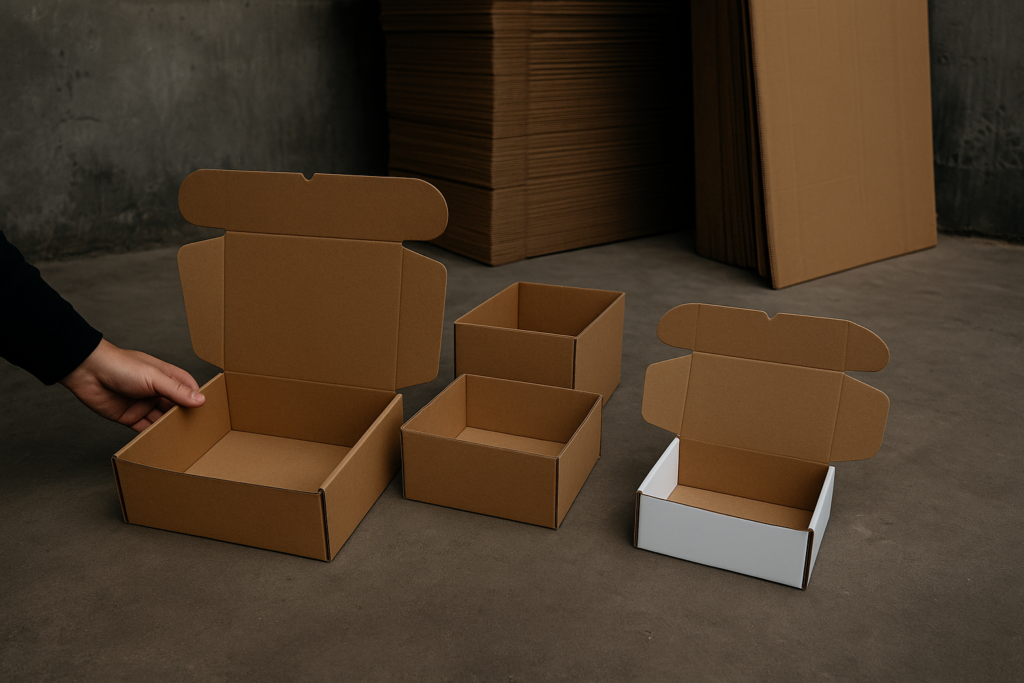
Our machines can form a wide variety of cardboard trays, boxes and punnets, giving producers the flexibility to explore packaging formats that better fit their products, production processes and sustainability objectives.
- Solutions across industries
From fresh produce and meat to bakery and other food applications, Boix technology is used across a broad range of industries. This experience allows us to look beyond the machine itself and consider the packaging format, required capacity and production environment.
- Efficient automation
Moving towards a different packaging material does not have to mean compromising production efficiency. Automated forming enables flat cardboard blanks to be transformed into ready-to-use trays and boxes directly within the packaging process.
- Flexibility for future developments
PPWR requirements will continue to be introduced over the coming years, while packaging designs and market demands will continue to evolve. Flexible machinery capable of handling different formats can therefore be an important consideration when investing for the future.
- From packaging concept to production
The transition to more circular packaging is about more than replacing one material with another. The packaging must work throughout the complete production and logistics process. Boix helps businesses find the right forming solution for their cardboard packaging and production requirements.
Turning regulation into opportunity
While PPWR introduces stricter rules, it also opens the door for innovation and improvement. For businesses, this is an opportunity to review existing packaging processes and consider where materials can be reduced, packaging can be redesigned or alternative solutions can be introduced. Boix is ready to support that transition, with proven technology, industry expertise and a clear focus on the future of packaging.
Looking ahead
PPWR is no longer on the horizon, it is here. While many of its major requirements will be phased in towards 2030 and beyond, now is the time to understand what the regulation means for your packaging operation and prepare for the changes ahead.
Are you considering a transition towards cardboard packaging or looking to automate your existing cardboard packaging process? Talk to Boix about your packaging requirements and discover how we can help turn your packaging concept into an efficient automated solution.