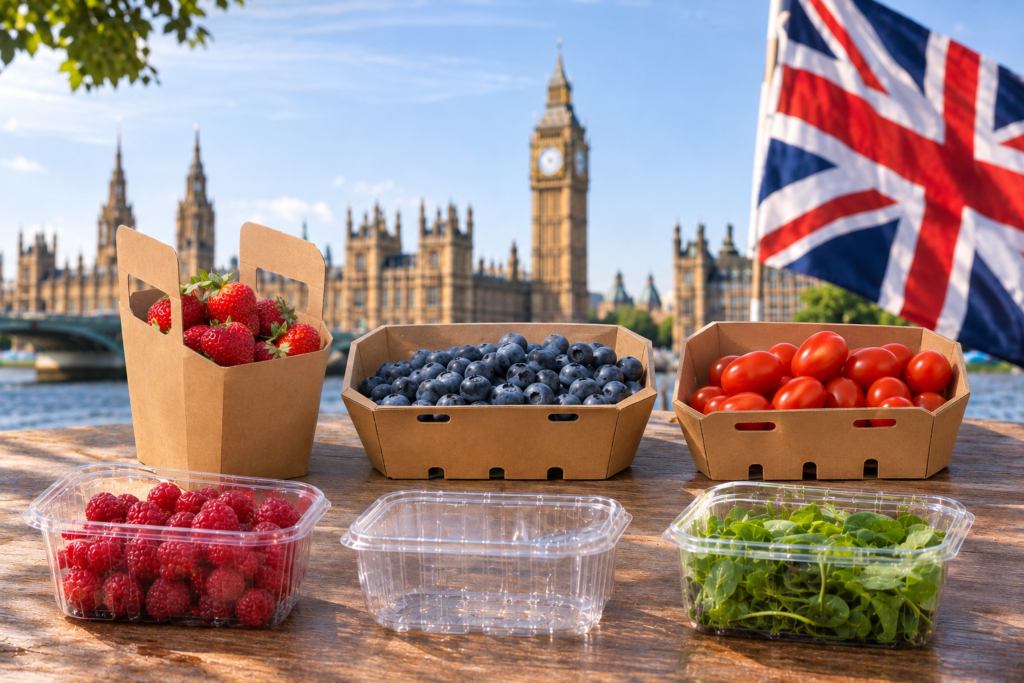



Since its introduction in April 2022, the UK Plastic Packaging Tax (PPT) has significantly changed how businesses approach packaging. Designed to reduce plastic waste and encourage the use of recycled materials, this regulation is pushing companies across multiple industries to rethink their packaging strategies. Combined with Extended Producer Responsibility (EPR) fees and wider developments affecting material, energy and transport costs, the financial impact of packaging choices is becoming increasingly important. But what does the tax actually involve, and how can businesses adapt effectively?
What is the UK Plastic Packaging Tax?
The UK Plastic Packaging Tax applies to plastic packaging that contains less than 30% recycled plastic. From 1 April 2026, the tax stands at £228.82 per tonne and affects UK manufacturers and importers of qualifying plastic packaging. In simple terms:
- You pay the tax if your plastic packaging contains less than 30% recycled material.
- You do not pay the tax if it meets or exceeds the 30% recycled threshold.
- The tax applies to finished packaging components, whether empty or filled.
The goal is clear: reduce reliance on virgin plastic and stimulate demand for recycled alternatives.
However, meeting the 30% recycled-content threshold does not necessarily mean that plastic becomes the most cost-effective option. As more businesses look towards recycled plastic, demand for suitable recycled material could increase, potentially putting additional pressure on availability and prices. Wider geopolitical developments can also affect raw material, energy and transport costs, adding further uncertainty to future packaging costs.
The impact on industry
For sectors such as fresh produce (including soft fruits and grapes), meat, bakery and the wider food industry, packaging is a critical part of operations. However, PPT and other packaging-related costs have made the financial implications of material choice increasingly important.
In addition to PPT, businesses also need to consider Extended Producer Responsibility (EPR) for packaging. Under the official 2025/26 EPR base fees, plastic is charged at £423 per tonne, compared with £196 per tonne for paper and card. For plastic packaging that is also subject to PPT, this creates a significant difference. Using these 2025/26 EPR base fees together with the current £228.82 PPT rate as an illustrative example, the combined difference between qualifying plastic and paper/card can reach £455.82 per tonne in PPT and EPR charges.
Actual costs depend on the packaging concerned and the applicable EPR period. From 2026/27, EPR fees are also being linked more closely to packaging recyclability, making the design and material choice of packaging increasingly relevant. As a result, many businesses are already actively exploring alternatives that are:
- More sustainable
- Cost-efficient in the long term
- Compliant with evolving regulations
This is where corrugated cardboard packaging is rapidly gaining ground.
Why cardboard is the logical alternative
Cardboard packaging offers several key advantages in the current regulatory landscape:
- Not subject to Plastic Packaging Tax
- Lower EPR base fees than plastic under the 2025/26 rates
- Widely recyclable and often made from renewable materials
- Strong, lightweight and suitable for several applications
- Aligned with consumer demand for sustainable packaging
Switching to cardboard is therefore not just about avoiding Plastic Packaging Tax. For suitable applications, it can also help reduce exposure to certain plastic-related costs and support a more future-proof packaging strategy.
How Boix supports your transition
At Boix, we specialise in cardboard packaging machinery, helping businesses transition from plastic to efficient, high-performance cardboard solutions. Our machines are designed to:
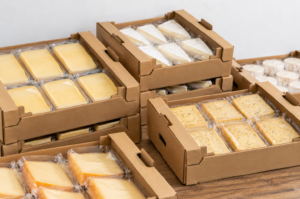
- Automate the forming of corrugated trays and boxes
- Handle a wide range of formats for industries such as fresh produce, meat and bakery
- Deliver high speed, reliability and consistent quality
- Reduce labour dependency and improve operational efficiency
For companies affected by the Plastic Packaging Tax, EPR fees and other increasing packaging costs, this means a practical and scalable way to move towards cardboard without compromising productivity.
A smarter, sustainable investment
Adapting to regulatory change can be challenging, but it also presents an opportunity. By investing in cardboard packaging automation, businesses can:
- Reduce exposure to increasing plastic-related costs
- Strengthen their sustainability credentials
- Improve packaging efficiency and consistency
- Stay ahead of evolving packaging legislation
At Boix, we work closely with our customers to provide tailored solutions that meet both operational and environmental goals.
Ready to make the switch?
The UK Plastic Packaging Tax is more than a regulatory hurdle; together with EPR and changing market conditions, it is another reason for businesses to take a closer look at their packaging choices.
If you are considering a transition from plastic to cardboard packaging, Boix is ready to support you with reliable machinery, technical expertise and a solution that fits your production process.
Get in touch with our team to explore how we can help optimise your packaging process and prepare your business for the future.